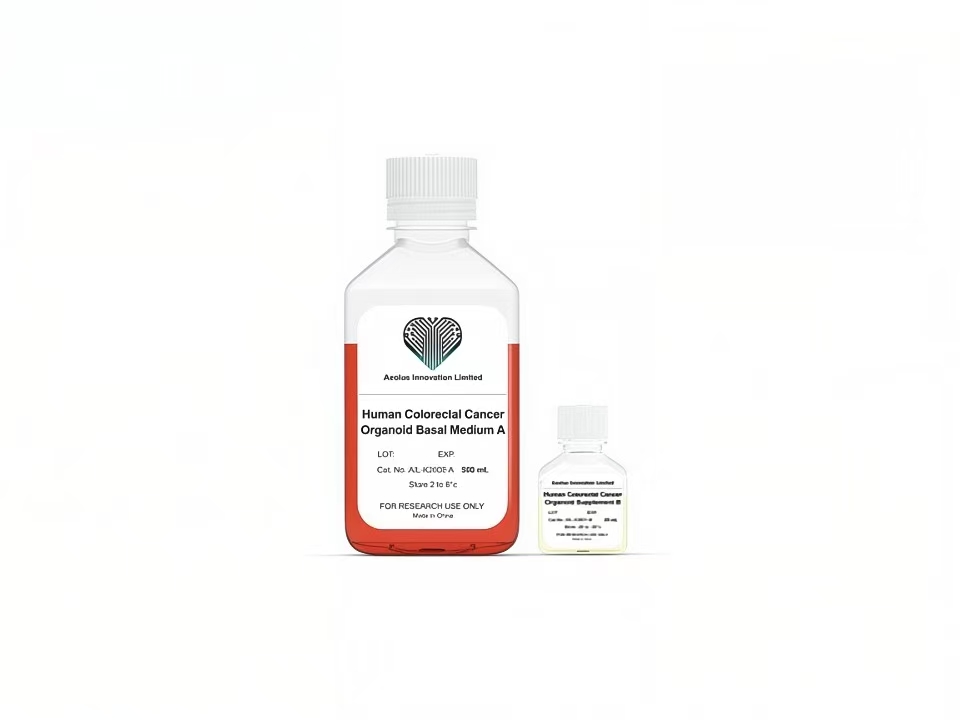
人源类器官完全培养基
人角膜类器官完全培养基
货号: GBCM0009
点击获取报价。
如需特价报价、免费样品、实验 Protocol、COA、SDS 或其他技术咨询,请联系我们的团队,技术专家将协助您为研究选择合适的解决方案。
产品规格
| 产品名称 | 人角膜类器官完全培养基 |
|---|---|
| 规格 | 100mL |
| 质控标准 | pH: 7.2~7.4Endotoxin content: <10 EU/mLBiosafety: Negative for bacteria, fungi, and mycoplasma detectionPerformance test: Passed organoid culture test |
| 储存条件 | Store at -20℃,valid for 6 months.Store at 2-8℃valid for 2 weeks.Once thawed, use immediately. Do not refreeze. Can be aliquoted and stored according to your needs. |
| 注意事项 | Upon receipt, store immediately in a -20°C freezer, or aliquot and store in a 2-8°C refrigerator.When unpacking, check for any leakage or damage.Use aseptic techniques during product handling to avoid contamination. |
产品描述
以下为英文原文说明,中文产品资料与实验方案请联系技术支持索取。
细胞来源与组织特征:
Human corneal organoids are derived from limbus tissue, central corneal epithelium, or iPSC differentiation.The cornea is a transparent non-vascular tissue at the front of the eye, which is responsible for light refraction and protecting the structure of the eye.The corneal epithelium is continuously renewed by limbal stem cells (LSCs/LESCs) located at the base of the cornea.Lack or dysfunction of limbal stem cells can lead to corneal blindness.The development of corneal organoids is of great significance for the study of corneal development, limbal stem cell biology, corneal disease modeling, and ocular surface regenerative medicine.iPSC-derived corneal organoids can produce a variety of eye lineages including the retina, lens, and ectoderm on the surface of the cornea through Hayashi et al.'s SEAM (self-formed ectoderm autonomous multi-zone) method.
人角膜类器官完全培养基 is a high-performance complete medium specifically designed for Human Corneal Organoid culture. This advanced formulation employs optimized nutrient composition and growth factor cocktails to precisely mimic the in vivo tissue microenvironment, supporting long-term establishment, expansion, and maintenance of organoids from primary tissue samples.
人角膜类器官完全培养基 is suitable for multiple applications including precision medicine research, high-throughput drug screening, toxicity testing, developmental biology studies, and organoid biobanking. The product undergoes rigorous quality control including sterility testing, endotoxin detection, functional validation using established organoid lines, and batch-to-batch consistency checks.
注意事项
- 仅供科研使用,不可用于诊断或治疗。
- 所有产品均经过无菌与性能验证等严格质量检测。
- 如需实验方案优化与问题排查协助,请联系我们的技术支持团队。
- 更多验证数据正在整理,将陆续上传。